Struggling to launch your own makeup brush line? The manufacturing process seems complex and expensive. You want your brand on a quality product, but starting from scratch is overwhelming.
Private label makeup brushes allow you to brand pre-designed, factory-tested products as your own. A manufacturer handles all production, from sourcing materials to final assembly. You simply choose the designs, add your logo, and create your custom packaging to launch your brand quickly.
Starting a brand can feel like a huge mountain to climb. You have a vision, but turning that vision into a physical product is a whole different challenge. Many entrepreneurs get stuck here, worried about factory contracts, quality control, and massive order quantities. But what if there was a simpler way to get started? A path that lets you focus on building your brand while an expert handles the production details for you. This is exactly where private labeling comes in. It’s a partnership that can bring your brand to life much faster than you think. Let's explore how it all works.
What Are Private Label Makeup Brushes?
Want to sell makeup brushes but don't want to design them from zero? Private labeling can be confusing. It seems like the same thing as OEM, but it's not.
Private label means you select from our existing, ready-made brush designs and put your brand's logo on them. It’s the fastest way to market. We handle the technical design and tooling, and you focus on your brand, packaging, and marketing.
Understanding the different manufacturing options is key to making the right choice for your business. Many people use terms like private label, OEM, and ODM interchangeably, but they are quite different. As a manufacturer, I see clients succeed when they choose the path that best fits their budget, timeline, and brand vision. Private label is perfect for new brands or retailers who want to test the market with proven products. It removes the long, expensive process of new product development. You get quality and speed. Below is a simple breakdown to help you see the differences clearly.
Private Label vs. OEM vs. ODM
| Service Type | Your Role | Manufacturer's Role | Best For |
|---|---|---|---|
| Private Label | Choose from existing products, provide your logo and packaging design. | Provides pre-designed, ready-to-produce brushes. Handles all manufacturing. | Brands wanting a fast market entry with low development costs. |
| OEM | Provide a detailed technical design and specifications for a new brush. | Manufactures the product exactly according to your design. | Brands with a unique product design and technical expertise. |
| ODM | Provide a concept or idea for a new brush. | Designs and develops a new product based on your concept, then manufactures it. | Brands with a unique idea but without the in-house design team. |
How Is a Private Label Makeup Brush Made Step-by-Step?
Ever wonder what actually happens after you approve a brush sample? The process seems like a mystery. You worry about whether the final product will match the quality you expect.
Making a makeup brush is a craft with many precise steps. We weigh the fibers, shape the head, secure it in the ferrule, attach the handle, and perform multiple quality checks. Each step ensures every brush meets your brand's high standards.
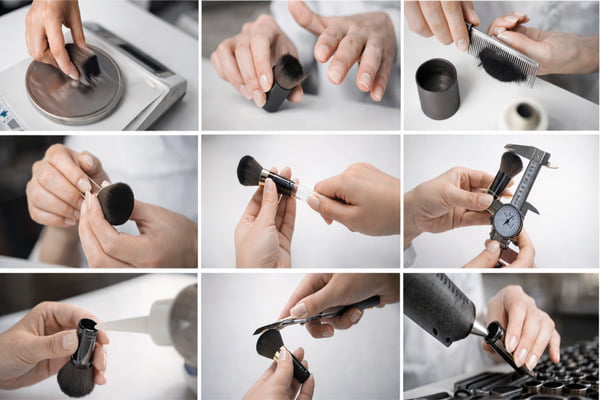
I've been in this factory for years, and I still find the process fascinating. It’s a mix of machine precision and human skill. A single brush passes through many hands before it's ready to be packaged. Each person has a specific job that they are an expert at. This attention to detail is what separates a cheap, disposable brush from a professional tool that lasts. When a client places an order, they are trusting us with their brand's reputation. We take that very seriously. Here is a look at the key steps every single one of our brushes goes through.
Step 1: Weighing a Single Amount of Hair
Everything starts with the bristles. We weigh the exact amount of synthetic or natural hair needed for one brush head. Precision here is critical for the brush's final density and performance.
Step 2: Combing the Hair
The weighed hair is carefully combed to remove any tangles or short, broken fibers. This ensures all the bristles are aligned perfectly, which is essential for a smooth application.
Step 3: Shaping the Hair in the Mold
The combed hair is then placed into a special mold. This mold gives the brush head its final shape, whether it's a fluffy powder brush, a tapered blender, or a flat foundation brush.
Step 4: Bundling the Whole Brush Head
Once shaped, the base of the brush head is tightly bundled together. This creates a secure and compact bundle that is ready to be placed into the ferrule.
Step 5: Placing the Hair into the Ferrule
The bundled brush head is inserted into the ferrule, which is the metal part that connects the bristles to the handle. It must be a snug fit.
Step 6: Measuring and Dimension Detection
We use tools to check the dimensions of the brush head. We make sure the length, width, and shape match the approved sample exactly.
Step 7: Drop Gluing
A special, strong epoxy glue is dropped into the base of the ferrule. This glue secures the bristles permanently, so they don't shed.
Step 8: Air Drying
The glued brush heads are placed on racks to air dry. This step is crucial and can't be rushed. The glue must be completely cured to ensure durability.
Step 9: Cleaning and Trimming Long Hair
After drying, we clean the brush head to remove any loose fibers. We also carefully trim any stray long hairs by hand to create a perfectly shaped finish.
Step 10: Applying Hot Glue Inside the Brush Head
A small amount of hot glue is applied inside the other end of the ferrule. This is what will secure the handle.
Step 11: Assembling the Brush Head and Handle
The handle is then firmly inserted into the ferrule. The hot glue creates a strong, immediate bond.
Step 12: Final Quality Inspection
Finally, every single brush undergoes a final inspection. We check for any defects in the bristles, ferrule, or handle. We also check the logo printing. Only perfect brushes are sent for packaging.
What Are the Common Mistakes Brands Make with Private Label Makeup Brushes?
You're excited to start your private label journey. But you're worried about making a costly mistake. Many new brands stumble, wasting time and money on easily avoidable problems.
The biggest mistakes are choosing a supplier based only on the lowest price, not ordering and testing physical samples, and poor communication. These can lead to low-quality products, delays, and a damaged brand reputation. Prioritize quality and clear partnership.
Over the years, I've worked with hundreds of brands, from small online startups to large retail chains. I've seen what leads to a successful launch and what leads to disappointment. The most successful partnerships are built on trust and clear communication, not just a purchase order. Some clients come to us after a bad experience with another factory, and the story is often the same. They were promised an incredibly low price, but the final product was unusable. It's a tough lesson to learn. To help you avoid this, I've put together a list of the most common mistakes we see and how you can easily sidestep them.
Common Pitfalls and How to Solve Them
| Common Mistake | The Problem It Causes | The Solution |
|---|---|---|
| Focusing Only on Price | You receive low-quality brushes with shedding bristles, loose ferrules, and cheap-feeling handles. This damages your brand's image. | Look for a balance of price and quality. A slightly higher price often means better materials, stricter quality control, and a more reliable partner. |
| Not Ordering Samples | The final bulk order doesn't match your expectations. The feel, weight, and performance are not what you saw in photos. | Always order physical samples before placing a bulk order. Test them yourself. Wash them. Use them. Make sure they represent your brand's standards. |
| Poor Communication | Misunderstandings about logos, packaging, or shipping lead to costly errors and delays. The factory might make assumptions if you are not clear. | Be very specific in your instructions. Provide clear design files. Ask questions and confirm every detail in writing before production begins. |
| Ignoring MOQs | You try to negotiate the Minimum Order Quantity (MOQ) down too far, and the factory uses cheaper materials or cuts corners to make it work. | Respect the manufacturer's MOQ. It exists for a reason, often tied to raw material purchasing and production efficiency. If you need a lower quantity, ask about our small-batch options. |
How Can You Find a Reliable Makeup Brush Manufacturer?
You need to find a manufacturer you can trust. But searching online gives you thousands of options. It's hard to know who is a real factory and who is just a trader.
Look for a manufacturer with internationally recognized certifications like ISO 9001 and FSC. Check their communication, ask for samples to test their quality, and see if they have experience working with brands in your market. A true partner will be transparent.
Finding the right partner is the most important step in building your brand. A good manufacturer is more than just a supplier; they are an extension of your team. They should understand your market, provide helpful advice, and be committed to your success. When you are vetting potential factories, don't be afraid to ask tough questions. A reliable partner will welcome them and provide clear, honest answers. You are not just buying a product; you are investing in a long-term relationship. Here are some of the key things we advise new clients to look for when they are choosing a manufacturing partner.
Checklist for a Good Manufacturing Partner
-
Certifications: Does the factory have quality and ethical certifications?
- ISO 9001: This ensures they have a strong quality management system. It means they are serious about consistent quality.
- SA8000 / Sedex: These show the factory is committed to social accountability and ethical labor practices. You can be sure your brushes are made in a safe and fair environment.
- FSC™: If you want sustainable wood handles and packaging, an FSC certification is essential. It guarantees the materials come from responsibly managed forests.
-
Communication: Are they responsive, clear, and professional? Do they speak your language well? Good communication prevents expensive mistakes.
-
Experience: Have they worked with clients in your country or market before? A factory with experience exporting to North America or Europe will understand the specific quality standards and regulations.
-
Transparency: Are they open about their process? A good factory will be happy to explain how they work and what to expect at each stage. They should operate as a partner, not just a vendor.
Conclusion
Private label manufacturing is the key to launching your makeup brush brand. It is a fast, effective, and lower-risk path to bringing your vision to life with an expert partner.